
A Meaningful Value Proposition | The Foundation of Success


In today’s crowded marketplace, what makes your organization stand out? Beyond products, services, or price points, it’s the ability to articulate a unique value proposition in a way that deeply resonates with employees, customers, and shareholders. A value proposition is not just a tagline; it’s a promise. A great one can inspire loyalty, attract ideal customers, and galvanize employees around a shared sense of purpose.
Crafting a meaningful value proposition goes beyond flashy words or generic benefits. It requires a deep understanding of your audience’s needs, challenges, and aspirations—and a clear commitment to solving their problems in a way that no one else can. A strong value proposition is as much about empathy as it is about strategy. It’s about aligning what you offer with what truly matters to the people you serve.
Yet, many organizations fall short. They either fail to differentiate, focus too heavily on themselves, or miss the emotional connection entirely. In today’s competitive landscape, a strong value proposition is not just a nice-to-have; it is a critical driver of business success. Whether you are building a new product, refining your strategy, or rallying teams around a shared vision, your value proposition is the foundation for creating alignment and delivering measurable results.
To help organizations and teams craft compelling value propositions, I developed the Value Proposition Toolkit, a step-by-step guide to designing and executing impactful strategies. Here is a quick set of instructions on how you can use it to unlock value for your customers and organization alike. To learn more about crafting tailored value propositions and building maturity models, reach out to me directly or soon you can visit jilliankulakowski.com. Let's work together to create value that truly resonates.
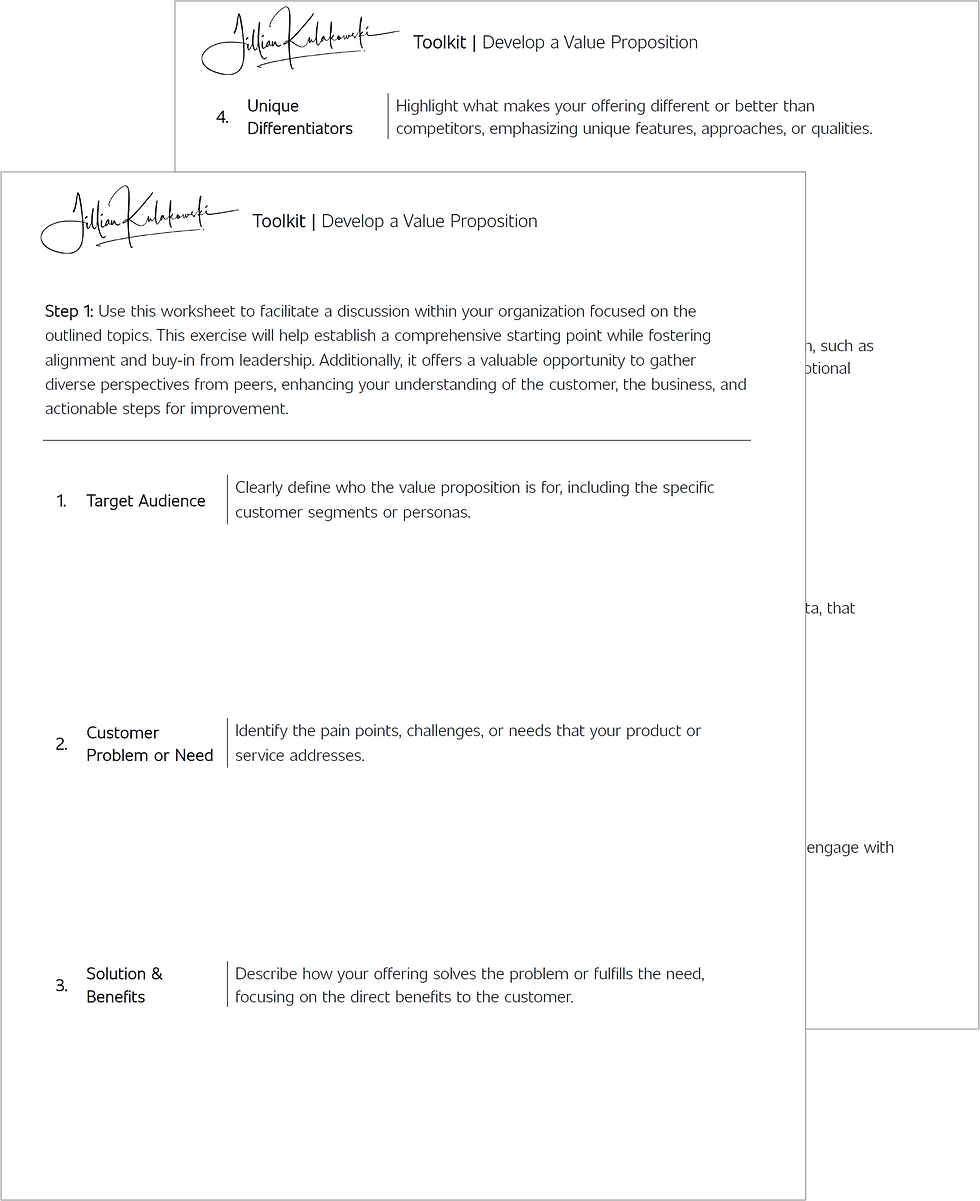
Step 1: Facilitate a Targeted Discussion
The first step in creating a value proposition is sparking the right conversations within your organization. Use the toolkit’s worksheet to:
Clearly define your Target Audience by identifying specific customer segments or personas. Who are you serving?
Understand the Customer Problem or Need by exploring their pain points, challenges, or goals. What are their struggles, and what outcomes are they looking for?
This discussion ensures you have a comprehensive starting point and fosters alignment among leadership, while also gathering diverse perspectives to inform your approach.

Step 2: Build Your Business Model Canvas
To bring your value proposition to life, use the Business Model Canvas to map out the key components that will support it. Focus on the following areas:
Value Proposition: Clearly articulate what makes your product or service unique and how it addresses customer needs.
Customer Segments: Identify the specific groups or personas your offering is designed to serve.
Channels: Determine how you will deliver your value proposition to customers, whether through digital platforms, physical locations, or direct engagement.
Customer Relationships: Define how you will build and maintain relationships with your customers, such as through personalized service, loyalty programs, or self-service options.
Key Activities and Resources: Outline the critical actions and resources needed to deliver your value proposition effectively.
This step ensures that every element of your business aligns with and supports your value proposition, creating a cohesive strategy that drives results.

Step 3: Align Insights with the Value Proposition Canvas
The Value Proposition Canvas helps refine your strategy by ensuring every element aligns with customer needs. The two core components:
Customer Profile: Define the customer’s key jobs (tasks or goals). Identify their pains (challenges) and gains (desired outcomes).
Value Map: Describe how your product or service relieves pains and creates gains. Ensure all offerings directly support the customer’s jobs.
This alignment makes your value proposition both compelling and actionable.

Step 4: Connect Strategy to Execution
Value propositions shouldn’t exist in isolation. The toolkit provides a framework to tie your value proposition to broader organizational or functional strategies by:
Strategic Themes: Linking gains and improvements for customers to high-level themes, which can align with a 3-year roadmap.
Customer Maturity Model: Incorporating levels of maturity (e.g., Initial, Defined, Managed, Optimized) to evaluate and measure progress over time.
For example, an organization might focus on delivering optimized customer journeys by first mastering foundational tools and processes, then scaling and evolving as customer needs grow.
Build, Evaluate, Evolve
Creating a value proposition is not a one-time effort. It requires constant evaluation, refinement, and evolution. By engaging your teams, aligning organizational strategies, and leveraging tools like the Value Proposition Canvas, you can ensure your efforts remain customer-focused and results-driven.


Comments